
Seeing someone suddenly collapse can be frightening and confusing. In those critical moments, what you do next can make the difference between life and death. This guide walks you through clear, practical steps to help you respond effectively and safely in an emergency.
- Stay Calm and Assess the Situation
Your first instinct may be panic—but staying calm is essential. Quickly scan the environment:
⦁ Is the area safe for you and the victim?
⦁ Are there any hazards (traffic, fire, electrical danger)?
If the scene is unsafe, do not put yourself at risk. Call for help immediately. - Check for Responsiveness
Approach the person and try to wake them:
⦁ Gently tap their shoulders
⦁ Speak loudly: “Are you okay?”
If they respond (movement, speech, or eye opening), keep them still and monitor their condition. - Call for Emergency Help
If the person is unresponsive:
⦁ Call your local emergency number immediately (in Nigeria, dial 112 or 767 depending on your network)
⦁ If others are around, assign someone specific: “You in the blue shirt, call an ambulance!”
Providing clear instructions avoids confusion. - Check Breathing and Pulse
Look for signs of life:
⦁ Is the chest rising and falling?
⦁ Can you feel breath on your cheek?
Check for a pulse (if trained)
If the person is:
⦁ Breathing normally → place them in the recovery position (on their side)
⦁ Not breathing or gasping → begin CPR immediately - Start CPR (Cardiopulmonary Resuscitation)
If there is no breathing:
Chest Compressions:
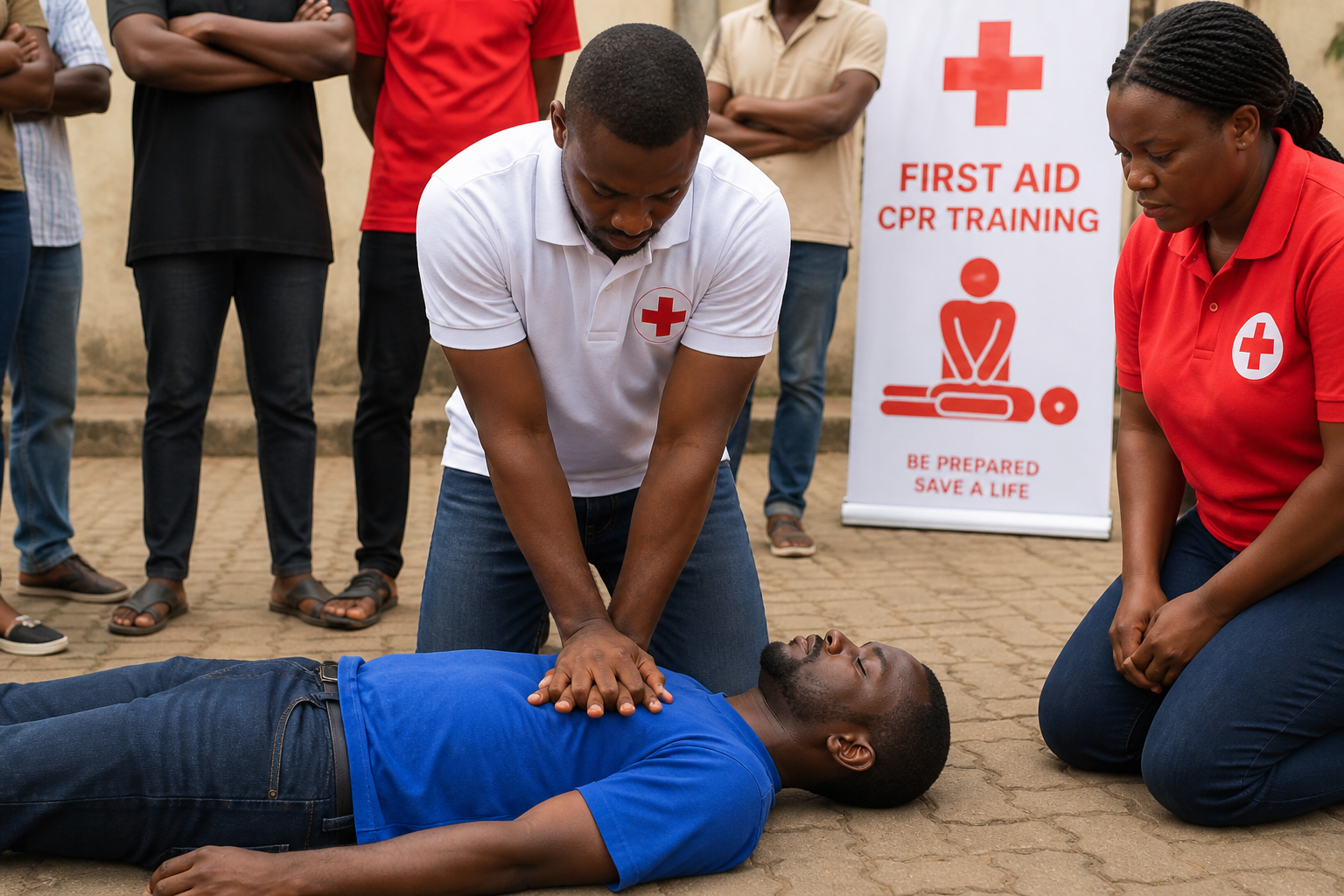
⦁ Place the heel of your hand on the center of the chest
⦁ Place your other hand on top
⦁ Push hard and fast (about 100–120 compressions per minute)
⦁ Allow the chest to rise fully between compressions
If trained, combine with rescue breaths (30 compressions to 2 breaths). If not, continue hands-only CPR. - Use an AED if Available
An Automated External Defibrillator (AED) can restore a normal heart rhythm:
⦁ Turn it on and follow voice instructions
⦁ Attach pads to the person’s chest
⦁ Ensure no one touches the patient during analysis or shock
AEDs are designed for public use and are safe even for beginners. - Place in Recovery Position (If Breathing)
If the person is breathing but unconscious:
⦁ Roll them gently onto their side
⦁ Tilt their head slightly back to keep the airway open
⦁ This prevents choking, especially if vomiting occurs - Monitor Until Help Arrives
Stay with the person and:
⦁ Watch their breathing
⦁ Be ready to resume CPR if needed
⦁ Keep them warm and comfortable
Provide reassurance if they regain consciousness. - Common Causes of Collapse
Understanding possible causes can help you respond better:
⦁ Cardiac arrest
⦁ Fainting (syncope)
⦁ Seizures
⦁ Stroke
⦁ Low blood sugar
⦁ Severe dehydration or heatstroke
Even if the person recovers quickly, medical evaluation is important. - What NOT to Do
Avoid these common mistakes:
⦁ Do not shake the person violently
⦁ Do not give food or drink to an unconscious person
⦁ Do not leave them alone
⦁ Do not delay calling for help

Why Emergency Awareness Matters
Many lives are lost simply because people nearby didn’t know what to do. Basic emergency knowledge empowers everyday individuals to act quickly and confidently. You don’t need to be a healthcare professional—just informed and prepared.
Final Thoughts
When someone collapses, every second counts. Remember the key steps:
Check → Call → Care (CPR if needed).
Learning first aid and CPR can make you a lifesaver in your community. Consider enrolling in a certified training program, such as Matrix Emergency Response Institute (MERI) to build your confidence and skills.